
Clockmaker: Jewel Match 3 Game
BELKA GAMESPuzzle
4.844.57K Reviews
- Version
- 105.2.0
- Installs
- 10.00M
- Age Rating
- Everyone
Screenshots






Our Review of Clockmaker: Jewel Match 3 Game
 Analysis by Appyee
I judge a match-three game by more than how satisfying its first few boards feel. I want to know whether its puzzles stay interesting, whether the surrounding story gives me a reason to continue, and whether the free-to-play pacing suits the way I actually play. Clockmaker: Jewel Match 3 Game makes a distinctive case for itself by putting jewel-matching inside a mysterious, slightly eerie town-saving adventure. That combination is its main appeal, but it also means it will suit some puzzle fans much better than others.
What to consider before you start
Clockmaker is a free puzzle game from BELKA GAMES, with a 4.8 average rating from around 536,000 ratings and more than 10 million installs. It is rated Everyone, and the game’s match-three format is easy to understand: swap jewels, meet a board’s objective, and move on through the adventure. The current version is 100.1.1, and it runs on Android 6.0 or later. Those details make it approachable, but they do not tell you whether its rhythm is right for you.
The more useful question is how you like to play. If you enjoy a clear, repeatable puzzle loop with a bit of story between challenges, the structure has an obvious draw. If you want a one-time puzzle collection with no waiting or spending prompts, a paid, level-based game may be a better match. Clockmaker is free to begin, but it includes optional in-app purchases ranging from $0.29 to $199.99 per item, so I would treat it as a game to sample at your own pace rather than one that promises a fixed, no-cost experience from start to finish.
It is also worth deciding how much narrative you want around a puzzle. Clockmaker frames its boards as part of a cursed-town mystery, which gives progression more personality than a bare sequence of jewel grids. That framing can make a familiar mechanic feel more purposeful. On the other hand, players who prefer puzzles to stay front and center may find the story and progression layer less appealing than a straightforward match-three app.
First Impressions and Gameplay
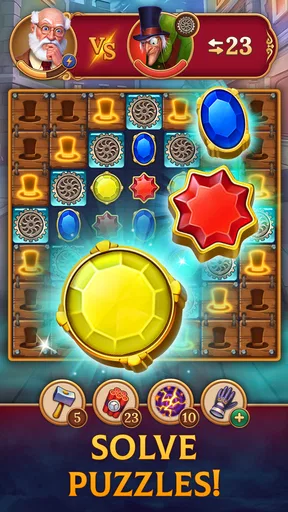
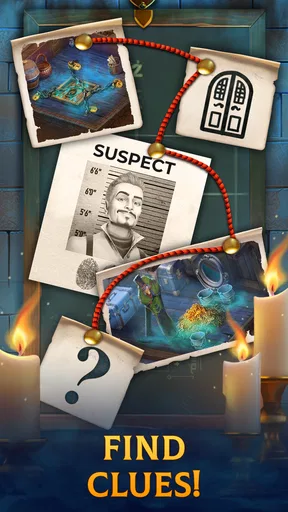
So, what’s the deal with Clockmaker: Jewel Match 3 Game? At its core, it’s a match-3 puzzle game, but it’s wrapped in a narrative that’s both intriguing and a bit eerie. You’re tasked with saving a town cursed by the evil Clockmaker, and to do that, you’ll need to solve puzzles and unlock various mysteries along the way.
The game starts off with a bang, pulling you into its world with stunning graphics and an engaging storyline. The visuals are top-notch, with vibrant colors and beautifully designed jewels that make each level a treat for the eyes. It’s clear the developers put a lot of love into the aesthetics, and it pays off.
Gameplay Mechanics
The gameplay is what you’d expect from a match-3 title, but with a few interesting twists. You’ll be matching gems to complete levels, each with its own unique objectives. What’s cool is the addition of mini-games and challenges that keep things fresh and exciting. It's not just about matching; you’ll need to strategize and think a few moves ahead.
There are over a thousand levels, so trust me, you won’t be running out of puzzles to solve anytime soon. And if you’re competitive like me, you’ll love the leaderboard feature where you can see how you stack up against players worldwide.
Turning short sessions into progress
For everyday play, I would approach each board as a small problem rather than trying to rush through a long run. Before making a match, I look at the stated objective and ask which part of the board actually advances it. A tempting match that clears a handful of jewels can be less useful than one that opens space or works toward the level’s specific goal. That simple pause is especially worthwhile when a board is proving stubborn: it helps me spend moves deliberately instead of reacting to whatever match catches my eye first.
That makes the game an easy fit for a short break, such as a few minutes while waiting for an appointment, provided you are comfortable with the possibility that a limited-lives system can interrupt a session. I would not start a level when I have to put my phone down immediately; a failed attempt can leave me wanting another try. For a calmer routine, I play when I can accept stopping after a board or two rather than expecting an uninterrupted stretch.
There is a useful distinction between being stuck because a board needs a better plan and being stuck because the game’s pacing is testing my patience. I try a fresh approach before using a booster, especially if I can see a way to prioritize the objective. Saving helpful tools for a genuinely difficult point makes them feel like a decision rather than an automatic response. If I am simply tired of replaying a level, I take a break instead of treating a purchase as the only way forward.
Progression can also make Clockmaker more compelling for players who enjoy a continuing goal. Solving boards does not just give me another puzzle to clear; it advances the town’s mystery. That is a meaningful difference from a collection of unrelated levels, though it depends on liking the game’s story framing. I see the narrative as motivation and atmosphere, not a substitute for enjoying the match-three play itself.
Features and Special Elements
Apart from the usual match-3 mechanics, Clockmaker introduces some nifty features. There are power-ups and boosters that you can use to clear challenging levels, and I found them pretty handy. The game also has daily quests and events that offer rewards, keeping you motivated to log in every day.
One of my favorite aspects is the storyline progression. As you solve puzzles, you unlock more of the town’s secrets, which adds a layer of depth to the game. The characters are quirky and memorable, making the narrative just as engaging as the puzzles themselves.
How it compares with other puzzle games
Compared with a very simple match-three game that focuses almost entirely on quick boards, Clockmaker offers more of a journey: objectives vary, and the mystery gives the levels a shared context. That is where it wins for me. If I want to feel that a puzzle is part of a larger progression rather than an isolated score chase, the town and its secrets give me a reason to keep going.
Different alternatives make sense for different moods. A minimalist puzzle game is a better choice when I want a clean, distraction-free challenge; a finite premium puzzle is more suitable if I want to avoid in-app purchase prompts and energy-based interruptions. A competitive match-three title may be preferable when ranking and head-to-head play are the main attraction. Clockmaker has a leaderboard, but I would choose it primarily for its mix of puzzles and story, not as a pure competition game.
The game’s regular quests and events also create a reason to return, but that can cut both ways. If daily check-ins feel like a pleasant nudge, they add variety to a routine. If you dislike games that encourage frequent return visits, you can ignore that layer and play when you want; just do not expect the game to feel like a completely self-contained set of puzzles with no ongoing structure.
What’s the Catch?
Now, no game is without its hiccups. While I love the challenge, some levels can feel a bit too difficult, almost edging on the side of frustrating. There’s an option to purchase additional moves or lives, which feels like a subtle nudge towards spending real money. It’s a common trend in free-to-play games, but it’s something to be aware of if you’re trying to avoid microtransactions.
Another thing to note is the energy system. You have a limited number of lives, and once they’re out, you’ll need to wait for them to regenerate or buy more. It can be a bit of a buzzkill if you’re on a roll and suddenly find yourself out of energy.
My practical advice is to decide on your spending boundary before a difficult level tests it. Since purchases are optional and the game is free to start, you can try it without committing to a purchase, but the range reaches from $0.29 to $199.99 per item. I would not assume that a small purchase is necessary to enjoy the core loop, and I would avoid buying extra moves in the heat of frustration. If waiting for lives to return feels like a deal-breaker, that is a good sign to choose a puzzle game without this kind of pacing instead.
Difficulty is another reason to be selective. Players who like retrying a puzzle and adjusting their plan may enjoy the challenge, while anyone who wants steady, effortless progress could find a tough stretch discouraging. A useful way to judge the fit is to notice whether a failed attempt makes you curious about a different strategy or simply annoyed that you cannot continue. The first reaction points toward the game’s strengths; the second suggests a more relaxed or interruption-free alternative may be better.
There is also a trade-off in the combination of story and mechanics. The narrative gives the campaign character, but someone who skips story in puzzle games may not get much value from that layer. Conversely, a player looking for a rich story first and puzzles second should know that matching remains the central activity. I think Clockmaker is at its best when both parts appeal, rather than when one is expected to carry the whole experience.
Who I’d recommend it to
I would recommend Clockmaker to someone who already likes matching jewels, wants clear goals on individual boards, and enjoys having a continuing mystery to follow. It is also a reasonable pick for casual players who prefer dipping into a larger game in short bursts, as long as they are comfortable pausing when lives run out. The Everyone age rating makes it accessible to a broad audience, though younger players should still have an adult’s help understanding optional purchases and deciding whether to spend.
I would steer away from it if your main priorities are uninterrupted play, a fully finite campaign, or a puzzle experience without free-to-play purchase options. It may also not be your best choice if narrative scenes slow you down or if repeated attempts at a difficult board quickly stop being fun. Those are not flaws everyone will feel equally; they are simply the points where another kind of puzzle game may fit better.
For someone moving from a different match-three game, the biggest adjustment is not learning how to make matches but getting used to Clockmaker’s objectives, progression, and limited lives. I would give the early experience enough time to see whether the town mystery adds motivation for you. If it does, the game’s structure can make familiar gem puzzles feel more involving. If it does not, there is little reason to force the switch just because the genre is familiar.
When I switch between puzzle games, I also think about what I want from the session before opening one. Clockmaker is the choice when I want a board with a concrete objective and a sense of campaign progress. If I have only a moment and cannot tolerate an interruption, I reach for something without limited lives; if I want a quiet logic problem rather than matching, I choose a different puzzle style. That makes it easier to enjoy Clockmaker for what it does well instead of expecting it to cover every puzzle mood.
For a new player, I would begin without buying anything, pay attention to the level objective before each move, and use boosters only when I have a clear reason. I would also treat daily quests and events as optional extras rather than obligations. That approach gives you a fair feel for the core game and its pacing before you decide whether you want to invest more time or money in it.
The Verdict
Overall, Clockmaker: Jewel Match 3 Game is a delightful blend of puzzles and storytelling. The visuals are stunning, the gameplay is engaging, and the storyline keeps you hooked. Whether you’re a casual gamer or a match-3 enthusiast, there’s something here for everyone.
Sure, there are a few bumps along the way with the difficulty and monetization, but they’re not deal-breakers by any means. If you’re looking for a game that’s both challenging and visually appealing, this one’s definitely worth a download.
So, why not give it a whirl? You might just find yourself lost in its magical world, just like I did. Happy gaming!
Verdict
Strengths of Clockmaker: Jewel Match 3 Game
- Engaging storyline with unique characters.
- Visually stunning graphics and animations.
- Regular updates with new levels and events.
- Easy to learn for players of all ages.
- No internet connection needed for play.
Limitations of Clockmaker: Jewel Match 3 Game
- In-app purchases can be expensive.
- Ads can be intrusive during gameplay.
- Some levels feel repetitive over time.
- Energy system limits extended play.
- Occasional bugs affect performance.
Other Releases by BELKA GAMES
View All
Bermuda Adventures Farm Island
Adventure4.5
Similar Picks in This Category
View All
Block Blast!
HungryStudio4.8

Braindom: Brain Games Test
Lahana Game Studio4.6

AMAZE!
CrazyLabs LTD4.6

Sudoku - Classic Sudoku Puzzle
Oakever Games4.7

Art Puzzle - Puzzle Games
Easybrain4.8

Amaze GO!
Oakever Games4.9
Frequently Asked Questions
What is the main objective of Clockmaker: Jewel Match 3 Game?
Clockmaker: Jewel Match 3 Game is a puzzle game where players match three or more jewels in a row to complete various levels. The primary objective is to solve puzzles by clearing jewels from the board, and in doing so, players help the fictional town restore its clock tower, solving mysteries along the way.
Are there any in-app purchases in Clockmaker: Jewel Match 3 Game?
Yes, Clockmaker offers in-app purchases. Players can buy boosters, extra moves, or lives to help advance through challenging levels. While the game is free to download and play, these purchases can enhance the gameplay experience, though they are not necessary to progress.
Is Clockmaker: Jewel Match 3 Game available offline?
Clockmaker requires an internet connection for some features, such as syncing progress and accessing certain events or updates. However, many levels can be played offline. It is recommended to connect periodically to ensure your game progress is saved and to access new content.
What makes Clockmaker different from other match-3 games?
Clockmaker stands out with its intriguing storyline and immersive graphics. Unlike typical match-3 games, it combines puzzle-solving with a narrative involving a mysterious town and its enigmatic clock tower. The game also offers unique challenges and events that keep the experience fresh and engaging.
Can I play Clockmaker on multiple devices?
Yes, Clockmaker supports cross-device play. By connecting the game to your Facebook account, you can sync your progress across multiple devices. This allows you to continue your game seamlessly, whether you switch between a phone and a tablet or upgrade to a new device.
Play our best games!


